Powered By Blogger

Monday, 25 March 2013

First Pak-Afghan parliamentary defence dialogue

A delegation of Pakistan’s Senate Standing Committee on Defense and Defence Production is due to visit Afghanistan on March 25 for the first parliamentary dialogue between the two countries in the defense sector.
The committee’s chairman, Senator Mushahid Hussain told a private TV channel that the three-day parliamentary dialogue would act as a force multiplier for Pak-Afghan relationship.

The two countries have traditionally had a complicated relationship characterized by mutual suspicion. Ethnic issues, border disputes and lately differences over counter-terrorism strategies have been the major sources of divergence between the neighbors described by President Karzai as ‘conjoined twins’, but lingering mistrust between their spy agencies widened the gulf.


Pakistani lawmakers visit to Afghanistan is followed after the acting head of the Afghan intelligence service, Hassamuddin Hassam, secretly visited Pakistan in December in a bid to narrow their strategic difference.
His visit took place after a suicide attack on the Afghan National Directorate of Security (NDS) chief Assadullah Khalid.

Acting head of the Afghan spy agency’s visit to Pakistan was aimed at investigating a suicide attack on Afghan spy chief Asadullah Khalid after the Afghan government had claimed that the attack had been planned in Quetta while President Hamid Karzai accused an unnamed foreign intelligence agency of having masterminded itPakistani security forces reportedly arrested two Afghan nationals in connection to the incident. According to the sources, Afghan spy agency was satisfied by the investigation and cooperation of Pakistan.

In the meantime Pakistani and Afghan officials also agreed on a structured military and intelligence dialogue and their army chiefs, heads of intelligence and directors general of military operations have been meeting regularly.
A major step forward towards building trust between the nations was taken after the arrest of a high-ranking Pakistani Taliban leader Maulvi Faqir Mohammad by the NDS at the end of February.

On the other hand Pakistan took the first step towards confidence building by releasing detained Taliban leaders to assist Afghanistan in the peace process.
Pakistan released at least 26 med to high ranking Taliban detainees in a bid to support Afghan-led peace process. Kabul and Islamabad have agreed on a mechanism for release of more Taliban to address shortcomings in the previous procedure, but the new system has not yet been activated.But the process has now been on hold for months with reports suggesting that President Karzai not being too cooperative.

Pakistan, Iraq to sign defence cooperation pact

Pakistan and Iraq have agreed in principle to sign an agreement soon to enhance their defence cooperation. Under the agreement, likely to be signed with the installation of new government in Pakistan, Iraq's Armed Forces personnel will be given training by the Pakistani side, said Shah M. Jamal, Pakistan’s Ambassador in Baghdad.

It will also include participation in each other's military exercises and exchange of visits by delegations and war-ships.
The Ambassador told the visiting Pakistani media delegation that they have recently offered to train 35 Iraqi pilots in the PAF Academy Risalpur, in batches of 12 officers per year.


Pakistan and Iraq will also sign soon four other agreements which give will boost to their trade and economic ties, he said, adding, a Ministerial meeting is also expected soon to review and strengthen our partnership.

Ambassador Jamal expressed the hope that relations between the two countries will be moving fast in all areas of mutual interest, with the restoration of peace in Iraq.
They will also sign soon an agreement for establishment of Pakistan Consultation mechanism between the Ministries of Foreign Affairs, he added.

He said he was putting all possible efforts to strengthen bilateral ties, especially enhancing our economic and trade interaction both at private and public level.

Saturday, 23 March 2013

Pakistan Army resolves to take terror threat head-on


Pakistan Army’s top brass in its meeting on Tuesday reviewed national securitysituation and resolved that the armed forces will follow a comprehensive strategy to combat terrorist threat being faced by the country.
The resolve was made at Joint Chiefs of Staff Committee Meeting (JCSC) which was held here at the Joint Staff Headquarters, according to an ISPR statement.


General Khalid Shameem Wynne, Chairman Joint Chiefs of Staff Committee presided over the meeting which was attended by Chief of Army Staff, General Ashfaq Parvez Kayani, Chief of Naval Staff, Admiral Muhammad Asif Sandila, Chief of Air Staff, Air Chief Marshal Tahir Rafique Butt, Secretary Defence, Chief of General Staff, Director General Joint Staff, Director General Inter Services Intelligence, Director General Strategic Plans Division and senior military officers from the three services.

JCSC is a quarterly moot of senior military leadership to assess and evaluate the operational preparedness of the Armed Forces.The meeting reviewed issues related to the national security, regional geo-strategic environment, and internal security situation along with the progress on the agenda points of last session.

Participants expressed their satisfaction over the standard of preparedness of Armed Forces to take on the upcoming challenges. It was reiterated in unequivocal terms that comprehensive strategy will be followed by the Armed Forces to combat the terrorist threat being faced by thecountry.

Chairman appreciated the sacrifices rendered in the realm of national security. Meeting also discussed the support of Armed Forces to ECP (Election Commission of Pakistan) during the forthcoming elections.

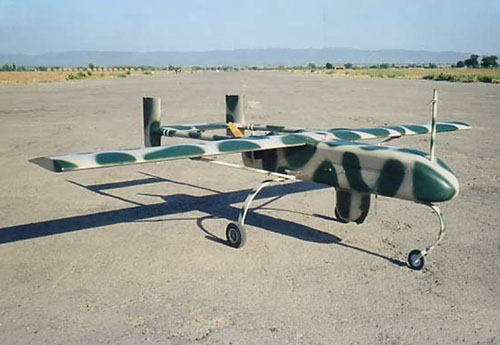
Pakistan keeping eye on India with UAVs


Pakistan's Unmanned Aerial Vehicles ( UAV) called 'Jasoos' have been spying on security arrangements and Army activities going on in the Indian side from the international border of Pakistan adjoining Rajasthan. In the recent past, activities of these UAVs have increased.

These UAVs can be spotted at night as sparkling red lights and have become a subject of excitement and discussion among the security forces. They are active even during day time and can be recognized by the trail of smoke they leave behind. These spy planes are active across the border opposite Barmer, Jaisalmer, Bikaner and Ganganagar in Rajasthan.


Reliable sources confirming this said that Pakistan is taking help of UAVs to keep an eye on the Indian area and their activities have intensified in the past few days.Sources said Pak had developed UAVs a few years ago with the help of America and Italy and are using them to spy on the Indian area.Sources said these spy planes are active at a height of 1500m-2000m just 500-700 yards from the international border.

These UAVs are fitted with ultramodern powerful cameras that can capture photographs of the Indian area spanning many kilometers. They are operated from a distance of 25-30kms. The computer operators are connected to the UAVs and they receive the photographs sent by these drones, the sources said.

Though BSF is keeping a watch over the activities of UAVs, but it is not possible to take any action since they are flying within the Pakistani border. But senior officers have been informed about the UAVs, sources added.


When contacted Col SD Goswami, defence spokesperson, said, "Our air defence units are monitoring such activities along the border. In case there is an air space violation, suitable action will be taken. All such violations are analysed and taken up with the country concerned through laid down channels as per established procedures."

He added that as per the international air space rules and bilateral agreements with neighbouring sovereign countries, such flying activities are permitted 10 km away from the international border, but any closer than the 10 km limit requires prior permission.

What are 'Jasoos'?

Jasoos are unmanned aerial vehicles (UAV) developed by Pakistani company Satuma. They are controlled via remote and weigh around 20kg. Capable of doing 180 kmph, these UAVs fly at a height of 10,000ft (3480m). Jasoos have a range of 100km, and can fly for 4-5 hours continuously with battery backup. Pak air force in the year 2004 had included UAVs, but was used in 2009 after the testing. Prior to this, Pak had purchased UAVs from Italy in 2003.


Pakistan to unveil 'Mine-Resistant, Ambush-Protected' (MRAP) vehicle

Faced with mounting casualties among security forces from roadside bomb attacks in its Tribal Areas, Pakistan is set to reveal an indigenous mine-resistant vehicle.

A spokesperson for Pakistan’s state-owned vehicle manufacturer, Heavy Industries Taxila (HIT), has confirmed that its Burraq mine-resistant, ambush-protected (MRAP) vehicle is nearing the end of its prototype phase and will be unveiled in “three to four months.” The announcement comes after years of development and failed efforts to acquire such a vehicle from other sources.

The need for an MRAP is great, and the military has acknowledged the considerable menace improvised explosive devices (IEDs) pose to security forces, particularly in the Tribal Areas along the Afghan-Pakistan border in fighting with the Taliban.

In what was perhaps the largest loss of life from an IED attack to date, 14 soldiers were martyred and 25 wounded during a Jan. 13 attack on a Pakistani Army convoy in North Waziristan.
Pakistan has reportedly sought better protected vehicles from as far away as Germany, Turkey and the U.S. However, a lack of financial resources seems to have hampered those efforts.

Failure to acquire an off-the-shelf solution ultimately led to the development of an indigenous answer.
However, as of November, with no news of the Burraq entering production and its non-appearance at Pakistan’s biannual exhibition, IDEAS2012, many analysts began to believe it had been quietly shelved. An order for an undetermined number of Poly Group Corporation Type CS/VP3 MRAP vehicles from China at IDEAS2012 reinforced that notion.

Hitherto, HIT has produced mostly tracked armored fighting vehicles, with some lightly armored four-wheel-drive and Toyota Corolla sedans its sole wheeled products.
According to HIT, the wheeled Burraq will carry 12 passengers and a crew of two. It has standard protection features similar to other MRAPs and will be open for export.

The 8-to-10-ton vehicle can withstand IED blasts of up to 10 kilograms, can be armed with a .50-caliber heavy machine gun (protected against fire from a similar weapon), as well as being fitted with bulletproof windows and run-flat tires. The occupants sit on blast-mitigating seats.

A former Australian defense attaché to Islamabad, Brian Cloughley, was given a briefing on the Burraq during a visit to HIT last year. He said he was impressed with what he saw.

“It appears that the Burraq is a mid-tech and affordable protective vehicle that should serve the defense forces well,” he said.
He said he was also “impressed with the proposed manufacturing process and with what I was told about its technical parameters, which, while not as advanced as U.S. or European equivalents, which are vastly expensive, seem to be adequate to counter the current IED threat.”

Having garnered a considerable amount of data from IED blasts, it appears Pakistan is able to adapt its designs to meet requirements, which Cloughley said is reflected in the Burraq’s design.
“The high profile is caused by the ‘V’-shaped underside, which is so necessary to minimize the effects of mines and IEDs, and although details of the degree of protection afforded are understandably kept confidential, I was told that analysis of the effects of IED incidents showed that Burraq’s armor configuration could cope well,” he said.

It is, however, less well protected than the Chinese Type CS/VP3, and analyst Haris Khan of the Pakistan Military Consortium said the Burraq has not yet been ordered by the military. It cannot meet requirements because, in its present form, it cannot withstand hits from the ubiquitous rocket-propelled grenade-7 (RPG-7), he said.

“Since most resistance in the military’s operations against militants is by IEDs and RPG-7s, Burraq is not designed and is not capable of countering the specific threat posed by the RPG-7. Some of the RPG-7 rounds used by the militants have very destructive warheads, which Burraq will not be able to withstand,” he said.

He said he believes a ready remedy would be bar/slat armor.

Still, Khan acknowledges the Burraq’s benefits, such as being based on a four-wheel-drive cross-country chassis, which is mechanically simple enough for Pakistan’s industry to locally support, and possessed reasonable protection against IEDs.
HIT has fitted bar/slat armor to main battle tanks such as the Type-69 II, and this could readily be applied to the Burraq.

Despite the large numbers of MRAP vehicles required, Khan said the Chinese vehicles could prove to be more affordable than the Burraq if a “soft loan” financial package is provided for their purchase.

Afghan spy chief secretly visited Pakistan


In an apparent indication of Pakistan and Afghanistan narrowing their strategic differences, the acting head of the Afghan intelligence service, Hassamuddin Hassam, secretly visited Pakistan in December.
His visit took place after a suicide attack on the Afghan National Directorate of Security (NDS) chief Assadullah Khalid.

The Afghan government had claimed that the attack had been planned in Quetta while President Hamid Karzai accused an unnamed foreign intelligence agency of having masterminded it.
Although Mr Hassam’s visit primarily focused on investigations into the attack on Mr Khalid, it also led to improved bilateralties at the military and intelligence levels.

Two Afghan nationals have been arrested by Pakistani authorities in connection with the attack. According to sources, the Afghan spy agency was satisfied by the investigation and cooperation of Pakistan.
Information about the visit was shared with the Senate Standing Committee on Defence and Defence Production during an ‘in-camera’ briefing by officials of defence and foreign ministries.

Members of the committee are going to Afghanistan on March 25 for the first parliamentary dialogue between the two countries in the defence sector.
The committee’s chairman, Senator Mushahid Hussain, said the three-day parliamentary dialogue would act as a force multiplier for Pak-Afghan relationship.

The two countries have traditionally had a complicated relationship characterised by mutual suspicion. Ethnic issues, border disputes and lately differences over counter-terrorism strategies have been the major sources of divergence between the neighbours described by President Karzai as ‘conjoined twins’, but lingering mistrust between their spy agencies widened the gulf.

The visit by the acting NDS chief was followed by the first visit to the country by Afghan Defence Minister Gen Bismillah Mohammadi which further improved the relationship. During the visit that went exceptionally well Gen Mohammadi even offered to give Pakistan a role in training the Afghan National Army.
Pakistan and Afghanistan have agreed on a structured military and intelligence dialogue and their army chiefs, heads of intelligence and directors general of military operations have been meeting regularly.

The arrest of a high-ranking Pakistani Taliban leader Maulvi Faqir Mohammad by the NDS towards the end of February was seen as a major step forward towards building trust between the two countries.
Replying to a question about the difficulties at the political level, a Pakistani diplomat said they were related to President Karzai’s sense of insecurity.

Pakistan took the first step towards confidence building by releasing detained Taliban leaders to assist Afghanistan in the peace process.
At least 26 mid- to high-ranking Taliban detainees were released last year in two or three batches. But the process has now been on hold for months.The two countries have agreed on a mechanism for release of more Taliban to address shortcomings in the previous procedure, but the new system has not yet been activated.

The temporary halt in the process, some say, is because of President Karzai not being too cooperative.
Meanwhile, Foreign Office spokesman Aizaz Chaudhry renewed Pakistan’s commitment to assisting Kabul with peace and
reconciliation.“We are also committed to the process that was initiated by the visit of the High Peace Council which included the element of support to the reconciliation process. We are facilitating reconciliation and will continue our positive contributions,” he said at his meekly media briefing.

Six army officers involved in abductions: DIG CID Balochistan

Submitting a progress report regarding the missing persons, DIG CID Balochistan has told the Supreme Court that six army officers are involved in the abduction of missing persons in Balochistan. The Criminal Investigation Department (CID) Balochistan on Wednesday submitted a report on missing persons before a three-member bench, which was hearing Balochistan law and order case.

According to the report submitted by DIG CID Feroze Shah, 10 military personnel are accused of abducting the missing persons. “Some 18 missing persons had returned home safe and sound but 48 people are yet to be traced,” he said. “Following the statements of 12 missing persons after they returned home the Balochistan police asked the Frontier Corps to trace the whereabouts of the accused army men including two Lt colonels, six majors and two subedars”, said the report submitted by the DIG in the SC.

The report further states that the FC personnel assured that they would extend full cooperation for the completion of investigation and the recovery of the missing persons. According to FC, some of the officers did not belong to the organisation and others had gone back to Pakistan Army.